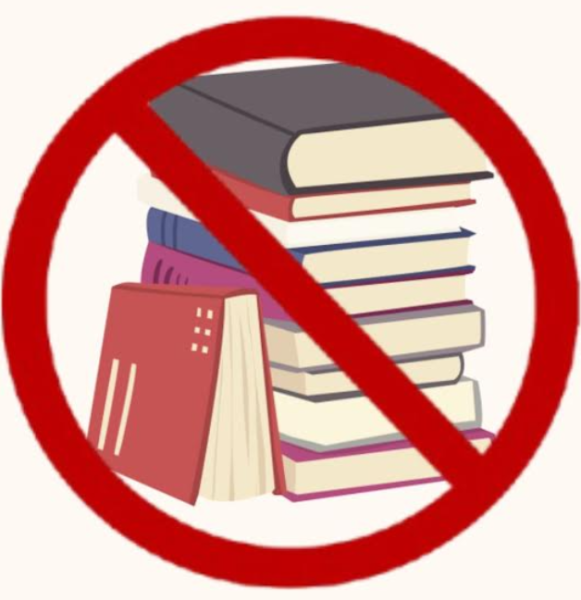
Between the 2023-2024 school year, over 10,000 book bans have occurred in U.S. schools. This marks a significant increase from previous years, which includes the removal and restriction of books in libraries and schools. Books are banned through a process called censorship, where schools or libraries remove a book due to objections to its content.
Politicians and community members debate whether it is morally right to ban books, as it may infringe on freedom of expression, limit access to information and hinder intellectual and empathetic growth. A 2022 study by First Books found that 71% of educators believe book bans conflict with their professional judgment and ability to teach. These bans have also affected thousands of students nationwide, with their teachers restricted from teaching well-known classics such as “Lord of the Flies” by William Golding, “Animal Farm” by George Orwell and “Fahrenheit 451” by Ray Bradbury—several books that St. Charles East students have read and researched for years.
Mrs. Libberton, a librarian at St. Charles East, shared her thoughts on book banning. “Book banning keeps people from having the opportunity to learn something different, to feel connected to a book or to be transported to a place unlike our own.” Mrs. Libberton went on to discuss the various books that people have attempted to censor, including the popular Harry Potter series by J.K. Rowling, who is a favorite in the St. Charles East library. Shortly after the book was published, objections were made against its content. Some claimed that the book promoted witchcraft and rebellion, which they believed could lead children astray. Harry Potter is one of the most beloved book series, but it was initially banned in thousands of libraries. Today, we cannot even imagine the removal of Harry Potter from our school library. Last year, according to the Department of Education, the percentage of 13-year-old children who read for enjoyment was around 14%. Banning books like Harry Potter, which teenagers enjoy reading outside of school, reduces overall reading and literacy levels, hindering educational performances in school. It also discourages teenagers from reading, as it can make topics feel taboo and limit exposure to diverse stories that reflect their own lives and experiences.
Furthermore, many members of the book industry have criticized book bans for targeting the LGBTQ+ community. Mrs Libberton said, “[The] most challenged books are LGBTQ+ related. Unfortunately, there was a lot of hate when [the book] “Gender Queer” first came out. That was a big deal. I had students that were hiding it underneath the display, because they didn’t think other students should read it.”
According to the American Library Association, nearly half (45.5%) of the 2,571 titles challenged in 2021 were written by or about LGBTQ+ individuals. These bans are typically motivated by social or political agendas aimed at censoring books with LGBTQ+ themes, despite arguments that such restrictions harm students by limiting diverse perspectives and reinforcing discrimination.
Books around the nation have been heavily censored due to their exploration of themes related to gender, race and sexual orientation—which some may find objectionable. Many organizations and politicians support banning books. In Illinois, an anti-book ban bill was passed in 2023. Republican lawmakers opposed the bill, arguing it diminished the power of local libraries and could force them to carry inappropriate materials. Those who ban books are often claiming to protect others—frequently children—from challenging ideas and information.
Overall, many individuals justify banning books based on a desire to control the material young people are exposed to in educational settings. Banning books can hurt students intellectually while also discouraging them from reading certain topics. It is important to continue reading and teaching these books to ensure we learn critical thinking skills and continue to broaden our perspectives.