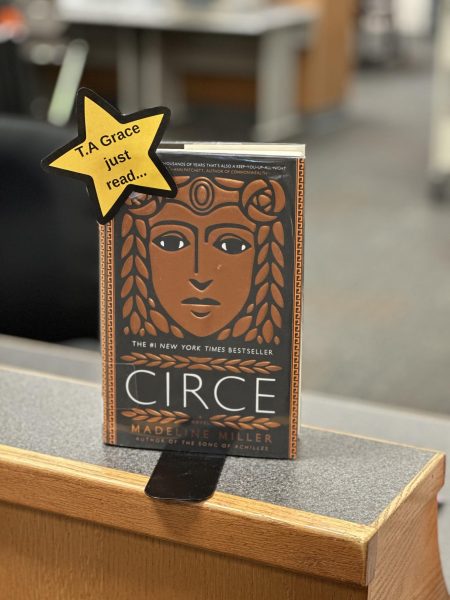
American Author Madeline Miller’s novel, “Circe,” is not just the retelling of a classic myth; it’s a high-spirited reinterpretation that invites readers to reconsider the familiar tales of gods and heroes from a fresh, feminist perspective. This powerful novel reimagines the life of the mythological witch from “The Odyssey.” This novel, in connection with scholar Emily Wilson’s translation of Homer’s epic, invites us to question the patriarchal structures embedded in classical literature.
“Circe” by Madeline Miller reimagines the life of a mythological witch from the book “Odyssey” by Homer, offering a compelling story of love, loss and the complexities of immortality, challenged with Circe’s identity as both a goddess and a woman. Born as a minor goddess in the powerful house of Helios, the sun god, Circe felt like an outcast among her divine, yet dysfunctional family. Circe discovers her power of witchcraft, leading to her exile and isolation. On Aiaia, she masters her craft, creating potions and transforming sadistic sailors who cross her into pigs. The novel spans centuries as she encounters iconic figures from Greek mythology, like Odysseus, Hermes and Medea. Each encounter challenges her understanding of the world and forces her to face her own desires and limitations.
As Circe defies the expectations of the gods and forges her own path, she becomes a symbol of female resilience. She learns to embrace her powers and create her own destiny, choosing mortals over the gods and heroes. “Circe” is a beautifully written and thought-provoking novel that celebrates the strength and complexities of women who dare to challenge the established order.
Madeline Miller’s “Circe” and Emily Wilson’s translation of “The Odyssey” offer complementary perspectives of a classic tale through a modern lens. Emily Wilson’s 2017 translation of “The Odyssey” into English made history as she was the first woman to ever do so. Her groundbreaking work strips away centuries of male-dominated interpretations, offering a fresh perspective on the epic.
Building on Wilson’s fresh perspective, Miller’s novel dives deeper into the experiences of these women. Wilson’s work brings a more modern perspective to the female characters in “The Odyssey,” giving them greater complexity. This includes more detailed portrayals of figures like Penelope and Circe. Miller’s novel directly builds upon this by giving Circe her own voice and perspective. “Circe” explores themes of female empowerment, resistance to patriarchal structures and the struggle for independence. The emphasis on female perspectives in Wilson’s translation laid the groundwork for Miller’s novel.
Both Emily Wilson’s translation of “The Odyssey” and Madeline Miller’s “Circe” offer vital insights into female empowerment and individuality. Wilson’s translation reconfigures the women in “The Odyssey.” Miller’s novel, on the other hand, expands this by giving readers a look into Circe’s life. This novel will resonate with anyone who enjoys mythology, fantasy or historical fiction. Readers interested in feminist perspectives will relish this novel. “Circe” provides a compelling story of self-discovery, challenging traditional expectations and following one’s own path. It is a must-read for anyone interested in a fresh take on ancient myths, a vibrant female protagonist and a story that celebrates self-determination.